01Reliance-Industries
02Larsen-Toubro
03Grasim-Industries
04JSW-Steel
05mahindra
06ICICI-BANK
07HDFC-BANK
08SBI-BANK
09Hindustan-Unilever-Limited
10ITC-Limited
11Tata-Power
12Vedanta
13Radico-Khaitan
14Kirloskar-Brothers
15cholamandalam-Finance
16Eicher-Motors
17MRF
18Supreme-Peterochem
19Bosch-Limited

India’s Most Trusted

Partner To Recover Your Shares

We help you recover your unclaimed shares, physical share certificates and investments from IEPF with complete transparency, legal expertise and personalized support.

100% Transparent 100% Transparent
Expert Legal Assistance Expert Legal Assistance
PAN India Support PAN India Support

home-hero-img
hero-floating-1
Physical Shares Recovery
hero-floating-2
Transfer Of Shares
hero-floating-3
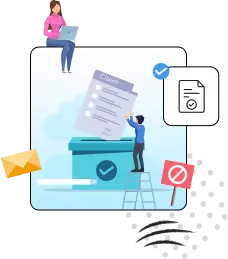
IEPF Claim Support
hero-floating-4
NRI Assistance

0+

No. of Investors Assisted

0 Crore+

Shares value recovered

0+

No. of Companies dealt with

0+

Shares Dispute Resolved

Are You Facing Trouble Recovering Your Shares?

Helping every investor recover their rightful financial assets smoothly and securely.

sharesrecover-icon1

Did you forget about your physical shares investments?

sharesrecover-icon3

Have physical shares? Let’s value them.

sharesrecover-icon5

IEPF 5 SRN rejected? Let us assist you in getting it approved.

sharesrecover-icon2

Tired and still unable to claim your physical shares?

sharesrecover-icon1

Let’s unlock your physical shares’ value.

sharesrecover-icon5

Was your IEPF claim rejected? Let us assist you in getting it approved.

sharesrecover-icon3

Helping you recover the wealth your loved ones built.

sharesrecover-icon2

Are you also facing trouble claiming your shares into your demat?

sharesrecover-icon1

Your IEPF claim was rejected? Let us help you get it approved.

Who we DEAL with

Helping every investor recover their rightful financial assets smoothly and securely.

deal-01

Retail Investors

deal-02

Depository Participants

deal-03

Registrar Transfer Agent

deal-04

Stock Exchange Board of India

Trusted by +1000 Client

Recovery Process

Recovery Process
1
arrow-1
process-1

Consultation

We understand your requirements and provide expert guidance.

2
process-2

Document Verification

We verify documents for accuracy and compliance.

3
arrow-2
process-3

Claim Filing

We file claims with IEPF and related authorities.

4
arrow-3
process-4

Recovery & Transfer

Recovered shares are transferred safely to your demat account.

Our Google Reviews

4 weeks ago

Google_icon

A big thank you to Ms. Sharlee for helping me recover my JSW shares when I had almost lost all hope. The entire process was handled professionally and efficiently.I truly appreciate the team's dedication and result-oriented approach. Highly recommended for anyone seeking assistance with share recovery services. Best Regards, Nikhil Kumar Sharma

1 month ago

Google_icon

Shares recover helped my father recover 50 year old shares, with only the original share certificate. The original company was acquired and didn't exist anymore. The process was long and slow , but we got the help we needed.Highly recommend.

1 month ago

Google_icon

I Used Shares Recover led by Sherlee Garg to recover my shares which had gone to IEPF account. Sherlee handled the matter with great professionalism, and the alacrity with which everything proceeded was very gratifying. I have absolutely no hesitation in stating that anyone entrusting their work to her will be very happy and thoroughly satisfied.

1 month ago

Google_icon

Hi , thanks a lot to Ms.Sharlee for recovering my Shares which were almost dead, zero hope of recovery. But you did a wonderful job to recover the same.It was Great help. You people are very professional and result oriented. I will definitely recommend you to my known people , Society friends to use your services. Regards Vrijender Pawar

7 months ago

Google_icon

For recovering my lost shares from IEPF the firm has done commendable job. Integrity and patience shown by madam Sharlee is really remarkable. I am senior citizen and very much happy with their work.Dharm chand

10 months ago

Google_icon

Anyone who has been trying to recover shares from IEPF can definitely take Sharlee's service. Very professional. Prompt in response. Used their service to recover shares that my father bought many years ago

11 months ago

Google_icon

The team is exceptionally competent and professional. At no point did I ever doubt a successful outcome. Although there were challenges from the company’s side, the team skillfully navigated every obstacle. In particular, Sharlee was thorough, precise, and kept me updated at every stage of the process. This is a highly professional and capable agency for handling any share recovery matters. Their in-depth knowledge of SEBI regulations and the IEPF share recovery process is truly commendable. They managed my application with great expertise, and I would wholeheartedly recommend their services to anyone in need

2 years ago

Google_icon

They are very professional and helpful. Special thanks to Sharlee Garg.

2 years ago

Google_icon

Very good experience. They took little bit more time but finally I got my lost shares in my dmat account.

3 years ago

Google_icon

Very professional and competent agency to deal with any issues of shares recovery.They have deep knowledge of the rules and regulations of SEBI and what goes into recovering IEPF shares .They managed my application excellently.I would recommend their services to anyone in need .

Why Choose Us?

Group (2)

Experienced IEPF Experts

Years of expertise in shares recovery and IEPF claims.

Group 347

PAN India Services

We serve investors across India with ease.

Group (3)

Transparent Process

Clear communication and transparent workflow.

Group 346

Fast Documentation

Quick and accurate documentation support.

Group 353

Dedicated Support

Personalized assistance at every step.

Group 354

Secure & Confidential

Your documents and information remain completely secure.

Shares Claim Recovery Advisors


    https://sharesrecover.com/wp-content/uploads/2026/07/iepfclaim.webp
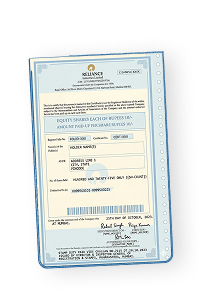
    • Check that old file, that drawer, that safe locker.

    • If you find share certificates — or even if you just remember an old investment — we can take it from there.

    • 100% Confidential: Your details are safe with us and used to respond to your query.

    Reclaim your Shares from Today!!

    Shares Recover In The News

    yourstory
    Outlook-Money-1
    mint-seeklogo
    inc42
    logo1
    business-standard-logo-2

    Our Latest Blogs

    blog-img
    The Procedure for Transfer of Shares: A Detailed Guide

    Broadly, most stocks in the investment world are shares—the most basic ownership unit in a company. The process of transferring ownership of shares has become a critical concept for various parties involved, including investors, businesses, or individuals alike seeking to trade, inherit, or gift shares. While it may appear as a simple concept, share transfer is, in fact, an authoritative, legal process that ensures that the foregoing elements are made clear, legitimate, and equitable. It journeys beyond ownership into a flawless record within a company’s register of members. Procedure for Transfer of Shares are basic in business organizations because they offer opportunities for reorganization, for new investors to enter, or for old investors to exit. In private or public limited companies, the process signifies transparency and adherence to regulatory practices. This blog intricately explores share transfers, their meaning, advantages and constraints, their process, and the necessary legal framework regulating such transactions as known.

    Meaning of Share Transfer

    In consideration of legally prescribed steps, the share transfer is the transfer of shares by a transferor to a transferee, and, therefore, it protects the interests of both parties while also appropriately updating the share register of the company by laying down the execution of the transfer deed and approvals, as well as fulfilling any formalities as required under the law. Transfers are generally restricted in private companies in their Articles of Association (AOA) in favour of the existing shareholders. For public companies, transfers are generally also free unless otherwise regulated. To raise capital, manage liquidity, or even correct the structure of ownership, a share transfer is proper documentation of a change in ownership without causing any disputes.

    Benefits of Share Transfer

    The transfer of shares makes it easier for both shareholders and companies. About shareholders, a transfer of shares provides liquidity advantages, as they may sell the shares and receive their liquidation value in return, while also supporting estate planning as the shares can be bequeathed to heirs. The advantages to the firm include the potential to attract new investors, facilitate merger activities, hedge ownership forms, management stability, and growth; at the same time, ensuring compliance with a legal framework by documenting such actions. The share transfers also stimulate a dynamic investment ecosystem. For public companies, trading on the open market will create investor confidence, while private companies strategically practice transferring their shares to onboard investors or collaborators whose vision aligns with their own.

    Restrictions in Share Transfer

    Share transfers provide some flexibility, but, as is common, private companies impose restrictions on such transfers in the Articles of Association (AOA). These are the right of first refusal, allowing existing shareholders the pre-emption on purchasing their shares before their sale outside the company; and board approval stipulations, requiring that new shareholders have similar goals to the company. Pre-emption can sometimes mean needing to offer certain people or groups selling outside. Usually, public company shares are freely transferable, but the regulatory bindings will also make sure that no transfers will be done based on insider trading laws, stock exchange rules, or maybe court orders or because of disputes.

    Process of Transfer of Shares

    Transfer of share LotBuyens Contract Call Option + ShareOption Transfer Agreement A share transfer deed—such as Form SH-4 of the Indian Companies Act—is executed specifying the number of shares as well as the amount of consideration and signatures of both parties. The transferor sends the share certificate with the deed to the company for checking the same with its Articles of Association or regulations. This involves verifying restrictions and obtaining approvals, such as board approval. Upon confirmation, the company modifies its register of members, identifies the transferee as the new owner, and issues a new share certificate.

    Final Steps for Transfer of Shares

    The final steps in the process of transferring shares involve careful documentation and communication. This makes sure that the statutory registers get updated regarding the company’s membership and the share transfer register to reflect the new owners. The final step might also involve filing certain returns at the ROC for private companies.

    Also, the transferee can only receive dividends or exercise rights attached to the shares once their name has been entered in the register of members. This highlights the requirement for efficient and precise processing of transfers of shares.

    There could be some legal formalities involved in other cases, like a share transfer from one minor to another from parents to a minor or trust to a minor, etc. Where foreign shareholders are involved, international share transfers may be subject to foreign exchange regulations, which must also be complied with. This is why companies need to stay updated about these nuances to avert any legal dispute.

    Communication ActivityCommunication is crucial in ensuring that all stakeholders concerned have awareness about the transfer. In large ownership, transferors are required to inform other shareholders, government regulators, and stock exchanges in the event they are classified as listed companies. This keeps companies transparent; transparency establishes trust and preserves reputational integrity in the market.

    Conclusion

    Transfer of shares is one of the mainstays of corporate governance that enables organizations to prosper in the rapidly evolving economic financial environments. A well-defined and clear process ensures that all transactions are legal and in line with mutual interests among both the corporation and shareholders. So, for processing, the transfer of shares is one of the steps to eliminate other negatives and an inexpensive way to agree with the company and prove commitment towards them through transferred shares showing professionalism and compliance.

    For companies that need assistance with their share-related challenges, services like those rendered by Shares Recover can prove to be of great help. The expertise with a customer-centric approach helps ensure that share transfers are smooth and reliable. Whether private or public, modern corporate life implements share transfers at the core of their daily actions, driving growth, sustainability, and long-term success.

    blog-img
    Simplifying the Rules for Transmission of Shares

    The transmission of shares is a highly sensitive and often understudied aspect of both corporate governance and succession regimes. The process of transferring ownership rights to a legal heir or nominee in the event of the physical holding company shareholder’s death or disability is called share transmission. For instance, while transmitting only rights the successors possess from the shareholders, it is engraved in the company shareholder registry, future litigations between the new owners are averted, and the register’s sanctity is upheld. So if any of the heirs and nominees or companies, they must be aware of the fact that there is a regulatory regime governing the process of transfer of shares. That calls for regulatory formalities, legal work on the documents, and specific details of bargaining between the stakeholders and investors. When done right, the initial process can be completed without significant time loss and/or further questions or debates.

    Process for Transmission of Shares

    The transfer of shares takes place when a shareholder has passed on or been declared legally incompetent. This makes the business distinct from share transfer since the latter takes place through a sale or gift by the shareholder, while in this case, the transfer happens under the legal system. For instance, in the event of the death of a shareholder, then the shares will be transferred to the beneficiary or next of kin as it will be specified in the will of the deceased person. If the shareholder dies intestate, then the shares are transferred according to their laws.

    The legal heir, nominee, or representative has to apply for the transfer with documents to the company. Once these documents are received and verified, the company then updates this record and issues a new share certificate if the physical lost certificate has been applied or updates the demate detail as per the ownership.

    Legal Framework for Transmission of Shares

    Transfer from one category to another is regulated by the Companies Act of 2013 in the Indian context. Section 56 of the Act provides the duties of the company and the documents that would necessitate the transmission. In addition to statutory provisions, the articles of association of the specific company are also of much relevance in case of deciding specific rules regarding the procedures.

    The Steps and Documents Required for the Transmission of Shares

    The steps involved in the transmission of shares are systematic and structured to ensure that rightful ownership is established without ambiguity:

      • Submission of Application: The legal next of kin or nominee must write a letter to the company informing the management that the shareholder is deceased or is incapacitated.

      • Verification of Documents: They also pointed out that any supporting document should also be attached when applying. These typically include:
          • Death certificate

          • A certified copy of the will or the certificate of succession

          • Administration with will or letter of administration

      • Indemnity Bond and NOC: Companies may request an indemnity bond or a no-objection certificate (NOC) from other legal heirs to avoid disputes.

      • Company’s Action: On the certification of the document, the company registers the name of the legal heir or nominee in the register of members and issues a new share certificate to him.

      • Depository Update: In case of holding shares in an electronic form, the D.P., in other words, the Demat account, records the new shareholding.

    Challenges and Practical Solutions

    Despite its structured framework, the transfer process can face challenges such as incomplete documentation, disputes among legal heirs, or delays in verification. To avoid these complications, some of the measures that firms have to put in place include the upcoming- the firm must give specific guidelines to the shareholders on the nomination of successors and ensure that records are regularly updated. Legal heirs also should not delay presenting the necessary documents and should consult a professional if required.

    Companies also have their parts to play in ensuring that the process is as less cumbersome as possible by ensuring that documentation and verification are done digitally. For example, it is possible to link transfer procedures with current systems for managing shareholders and achieve important gains in terms of time. In addition, it helps to explain to shareholders about the nominations and avoid possible conflicts and delays, using the lack of proper documents filed by the nominee among the arguments.

    Conclusion

    Share transmission is not only the mere compliance process; it is more about expressing corporate governance, the power, and the strength of legal inheritance. Familiarisation and strict compliance with these rules will allow for avoiding conflicts in the process of ownership rights transfer between companies and shareholders. Originally, clarity, communication, and compliance ensured an effective flow or mode of transmitting papers. To those within organisations charting this course, it is important to note that often professional advice combined with anticipatory action can reap very big gains. While reducing the complexities of rules regarding the transfer of shares, we protect legal heirs and ensure fair business and democratic practice in the corporate world. If you need expert help or full information regarding the transfer of shares, Shares Recover is your reliable ally in matters of compliance and efficient problem-solving in the sphere of transmission of shares.

    blog-img
    Understanding Share Transfer and Transmission Rules

    Stocks are the fundamental type of security in company ownership, as they show a shareholder’s interest in a corporation. For several good reasons, such as a change in the fortunes of the business, alteration in an individual’s circumstances whereby they would need to make changes in their shareholding, thus transfer and transmission of shares. These procedures guarantee the right people own the shares or that the shares are properly managed. In conformity with the existing law and business ethics. Any person or corporate entity who wants to transfer or transmit the shares must understand the diverse aspects related to it so that no complication arises and the exchange complies with the Companies Act, 2013. This article looks at the various regulations, processes, and differences between these two fundamental ideas and will enable you to manage such transactions effectively.

    What is Share Transfer?

    Share transfer can also be described as the decision made by the shareholder to allow another person to own shares in the organization. This process is often done on mutual consent of the transferor, the individual who is transferring the asset (seller in the sale process) and the transferee, the individual to whom the asset is transferred (buyer in the sale process), after following all the business related formalities and legal requirements recognized for a particular company. It can be implemented in many situations, like the selling and buying of shares in the stock exchange, the selling and buying of shares between family members, and getting rid of stakes with mutual partners or investors.

    Share transfer can be done through signing a share transfer form with the right stamp duty, and filing documents in the company. After receiving the nod from the company’s board of directors, the name of the transferee is recorded in the company’s register of members.

    What is Share Transmission?

    While share transfer is voluntary, share transmission takes place by the law courts to make it happen. It refers to the process of passing on the shares to a third party because of events which are unavoidable for instance death, insolvency or disability that befalls the shareholder. Such occurrences entail the passing of shares to the legal next of kin, nominee, or representing entity of the deceased or the incapacitated shareholder without entering a legal agreement.

    The process of share transmission is relatively straightforward and does not involve stamp duty since it is not a voluntary sale or transfer. The successor must provide documentary evidence, such as a death certificate, succession certificate, or probate of the will, to claim ownership of the shares. Once verified, the company updates its register of members to reflect the new ownership. Share transmission ensures the seamless transition of ownership while safeguarding the rights and interests of the rightful claimant.

    Difference Between Transfer and Transmission of Shares Under the Companies Act, 2013

    While both share transfer and share transmission lead to a change of ownership, both of them are radically different in terms of the characteristics, the procedures, and the consequences. Share transfer is different from share transfer in that it can be motivated by money, although it involves the discretion of the shareholder. In contrast, share transmission is an unwanted act that results from legal occurrences such as death or bankruptcy.

    The last difference can be pointed out in documentation and compliance processes. Any transfer requires that a transfer deed be prepared and stamped as well as the consideration for stamp duty. On the other hand, for shared transmission, one has to offer the legal event that has happened, for instance, a death certificate or a court order, without having to pay stamp duties. The cycle and all the procedures that they undertake are equally different and may take more time, especially for share transfer, as it is contractual. Knowledge of the aforementioned differences is necessary for the operation of shareholders and corporations, which would be subjected to official ownership change mechanisms provided in the Act of 2013.

    Transfer and Transmission of Shares as per Companies Act, 2013

    The laws governing the transfer and transmission of shares are majorly owed to the Companies Act of 2013 in India. Regarding the provisions that guarantee transparency, accountability, and shareholders’ protection in such processes under the Act, there are detailed provisions as follows. Requirements of section 56 of the Act speak in detail about the provisions related to share transfer and require that a share transfer deed be filed in the prescribed form SH-4, that stamp duty be paid, and that the deed along with the share certificates be submitted to the company within a certain period. The transfer can only be done with the permission of the company’s board of directors, or it will be rejected if it violates the Articles of Association.

    Concerning share transmission, the Act is flexible to cater to the legal and inevitable occurrence of ownership transfer.

    The legal heir or nominee must submit relevant documents, such as a death certificate and succession certificate, to the company. Upon verification, the company updates its register of members to reflect the new ownership. The Companies Act also emphasizes the importance of maintaining accurate records and ensuring that the process does not infringe upon the rights of the rightful claimant.

    By adhering to the provisions of the Companies Act, 2013, companies and shareholders can ensure that both share transfer and transmission are conducted in a fair, efficient, and legally compliant manner.

    Conclusion

    Transfer and transmission of shares are integral to the dynamic landscape of corporate ownership, enabling seamless transitions while safeguarding stakeholder interests. Whether it involves a voluntary transaction or an inevitable legal event, these processes require a thorough understanding of the underlying rules and regulations. The Companies Act, of 2013, provides a robust framework for managing these changes, ensuring transparency, compliance, and protection of shareholder rights. For investors and companies alike, navigating the complexities of share transfer and transmission with clarity and precision is essential to maintaining trust and accountability. If you need expert assistance with these processes, Shares Recover offers reliable solutions tailored to your needs.

    Frequently Asked Questions

    The most common reasons are KYC mismatches — for example, the name on the PAN card not exactly matching company records — unverified PAN details, incorrect bank or demat account information, missing attachments, and discrepancies in the number of shares or dividends claimed. Our team pre-checks every document before submission to prevent these issues.
    Yes, absolutely. When we process your claim, our team ensures that all accrued corporate benefits—including stock splits and bonus shares —are tracked down and fully recovered along with your original shares.
    There is no need to visit our office. The entire share recovery process is handled remotely and online. We will manage the documentation, coordinates, and filing digitally, allowing you to track your claim comfortably from anywhere.
    certificate-01

    Unlock the Value of Your Forgotten Shares

    Speak with our experts today and begin your recovery journey confidently.

    Recover My Shares cta-shape

    Shares Recovery Expertise

    01Reliance-Industries
    02Larsen-Toubro
    03Grasim-Industries
    04JSW-Steel
    05mahindra
    06ICICI-BANK
    07HDFC-BANK
    08SBI-BANK
    09Hindustan-Unilever-Limited
    10ITC-Limited
    11Tata-Power
    12Vedanta
    13Radico-Khaitan
    14Kirloskar-Brothers
    15cholamandalam-Finance
    16Eicher-Motors
    17MRF
    18Supreme-Peterochem
    19Bosch-Limited
    WhatsApp WhatsApp us